|
Thursday, January 22, 2026 NIH Announces Major Policy Shift to End Use of Human Fetal Tissue in NIH-Supported Research
Image
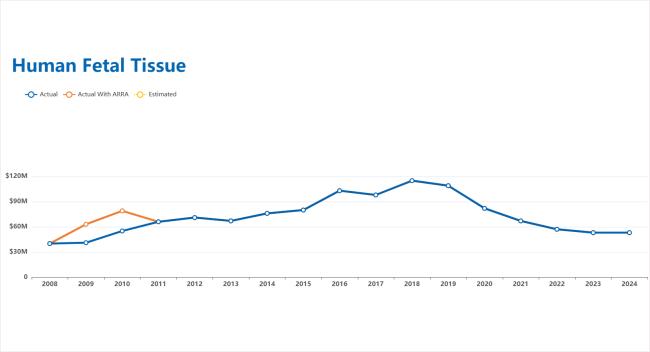
Graph shows NIH spending on human fetal research over time. NIH The National Institutes of Health (NIH) today announced a new policy ending the use of human fetal tissue in NIH-supported research, marking a significant milestone in the Trump Administration’s efforts to modernize biomedical science and accelerate innovation. Effective immediately, NIH funds will no longer be used to support research involving human fetal tissue from elective abortions. The policy applies across the NIH Intramural Research Program and all NIH-supported extramural research, including grants, cooperative agreements, other transaction awards, and research and development contracts. This action supersedes prior NIH guidance and reflects a clear shift toward next-generation, validated research models better suited to today’s rapidly evolving scientific landscape. “NIH is pushing American biomedical science into the 21st century,” said NIH Director Jay Bhattacharya. “This decision is about advancing science by investing in breakthrough technologies more capable of modeling human health and disease. Under President Trump’s leadership, taxpayer-funded research must reflect the best science of today and the values of the American people.” NIH-supported research using human fetal tissue has declined steadily since 2019, with only 77 projects funded in Fiscal Year 2024. At the same time, advances in organoids, tissue chips, computational biology, and other cutting-edge platforms have created robust alternatives that can drive discovery while reducing ethical concerns. The updated policy ensures that limited public resources are directed toward research approaches that offer the greatest potential to improve health outcomes for all Americans. NIH will continue to assess additional areas where modernization can accelerate progress and will engage the scientific community in identifying emerging technologies that can further reduce reliance on outdated research models. NIH will soon seek public comment on the robustness of emerging biotechnologies to reduce or potentially replace reliance on human embryonic stem cells in an effort to continue to drive modernization. This policy update underscores the Administration’s commitment to scientific excellence and responsible stewardship of taxpayer dollars, helping to ensure that America remains the global leader in biomedical innovation while reflecting the values of the people it serves. About the National Institutes of Health (NIH): NIH, the nation's medical research agency, includes 27 Institutes and Centers and is a component of the U.S. Department of Health and Human Services. NIH is the primary federal agency conducting and supporting basic, clinical, and translational medical research, and is investigating the causes, treatments, and cures for both common and rare diseases. For more information about NIH and its programs, visit . NIH…Turning Discovery Into Health® Additional InformationNIH Director’s statement
Institute/Center
National Institutes of Health (NIH)
Contact
NIH Office of Communications (责任编辑:) |