|
The Soviet Union’s involvement in Afghanistan during the Cold War marked one of the longest and most significant conflicts of the era, often referred to as "the Soviet Union's Vietnam." The invasion began in December 1979 when the USSR intervened to support the communist government of Afghanistan, which was struggling against a growing insurgency of Afghan mujahideen fighters who opposed the government’s secular and socialist policies. The Soviet forces aimed to stabilize the government and suppress the U.S.-backed mujahideen, who received extensive support in the form of arms and funding, particularly from the United States, Pakistan, and Saudi Arabia. The Afghan Civil War and the Rise of the PDPAAfghanistan became a focal point of Cold War tensions due to internal political upheaval and its strategic location. The People's Democratic Party of Afghanistan (PDPA), a Marxist-Leninist party, seized power in a coup in 1978, igniting widespread unrest. The PDPA's radical reforms, including land redistribution and secularization, alienated traditional Afghan society, especially rural tribes and religious leaders. A civil war erupted between the PDPA government and various insurgent groups, collectively known as the Mujahideen.
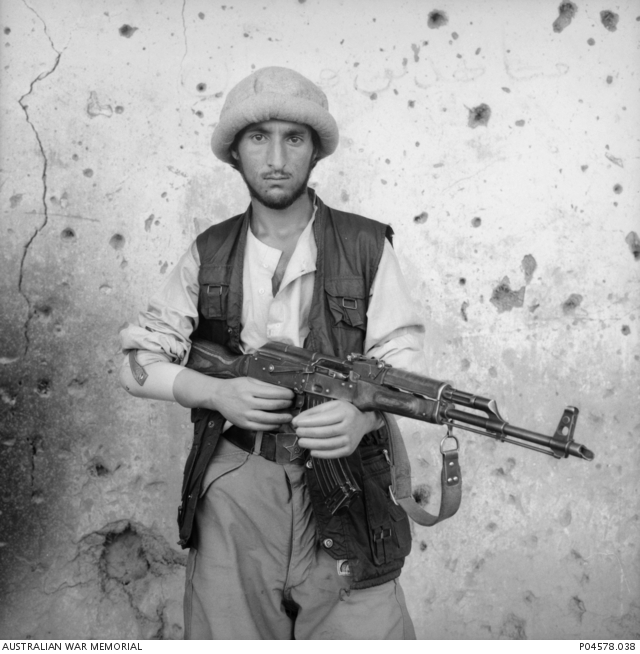
Portrait of Mujahideen Fighter The Soviet Invasion and ObjectivesFearing the collapse of a communist ally and the rise of Western influence in its southern backyard, the Soviet Union invaded Afghanistan in December 1979. The USSR aimed to stabilize the PDPA regime, suppress the Mujahideen, and prevent the country from aligning with the United States or Islamic forces hostile to communism. Over 100,000 Soviet troops were deployed, but they faced stiff resistance from a decentralized and highly motivated insurgency.
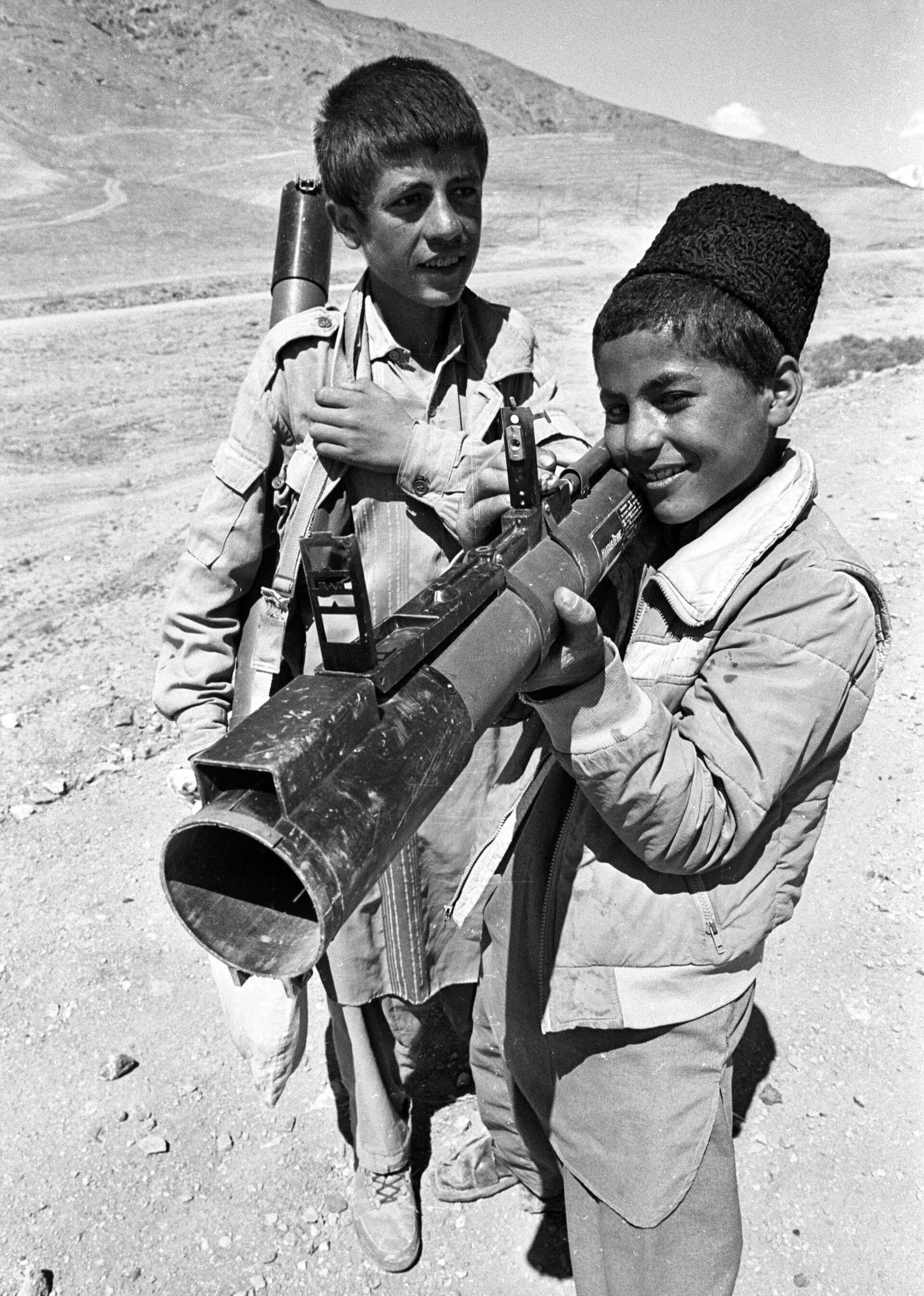
Afghan Children Playing with Spent Anti-Tank Weaponry US and Allied Support for the MujahideenThe United States, along with Pakistan, Saudi Arabia, and other allies, provided extensive support to the Mujahideen as part of the broader strategy to counter Soviet expansionism. The CIA's Operation Cyclone funneled billions of dollars in military aid, including advanced weaponry such as Stinger missiles, which significantly undermined Soviet air superiority. Pakistan’s Inter-Services Intelligence (ISI) acted as the main conduit for distributing arms and training insurgents, further intensifying the conflict. The Soviet-Afghan War became a drawn-out conflict characterized by the guerrilla tactics and ambushes of the Mujahideen, who skillfully utilized Afghanistan’s rugged mountainous terrain to counter the Soviet Union's superior firepower. Key battles, such as those in the Panjshir Valley, showcased the insurgents' resilience and ability to inflict significant losses on Soviet forces. By the late 1980s, mounting casualties, widespread international condemnation, and the economic strain of the war compelled the USSR to negotiate a withdrawal. The conflict officially ended with the signing of the Geneva Accords in 1988 and the final Soviet troop withdrawal in 1989. The war had profound and far-reaching consequences: it accelerated the decline of the Soviet Union, contributing to its eventual collapse in 1991, and left Afghanistan devastated, with millions displaced and its economy in ruins. The resulting power vacuum and the militarization of Afghan society facilitated the rise of Islamist militancy, including the Taliban and Al-Qaeda, reshaping global geopolitics and laying the groundwork for future conflicts. (责任编辑:) |