|
(Correctly called "") The metric system is a system of measuring. It has three main units:
m the meter for length kg the kilogram for mass s the second for time
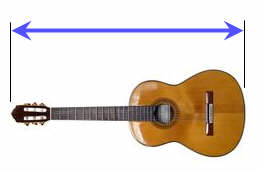
With those three simple measurements The length of this guitar is about 1 meter:
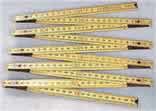
When unfolded this ruler measures 2 meters:
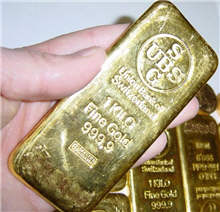
This gold bar has a mass of 1 kilogram:
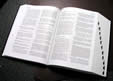
A dictionary also has a mass of about 1 kilogram:
1 second is about as long as it takes to say "one thousand one" images/clock-drag.js?w=300 Larger or SmallerBut what if we want to talk about really big or really small things? Answer: we can use Metric Number Prefixes like "kilo" (a thousand) and "milli" (one thousandth) and so on Examples: something that's 1,000 meters is a "kilometer" a very short time of one thousandth of a second is a "millisecond"
In fact the kilogram already uses this method, as it's a thousand grams, a kilogram. Here's a quick summary of the special prefixes: Common Big and Small Numbers
Name
The Number
Prefix
Symbol
Examples: A thousand meters is a kilometer and abbreviated km (k for kilo, m for meter) A million liters is a megaliter and abbreviated ML A millionth of a second is a microsecond and abbreviated µs (µ is the greek symbol "mu") These prefixes are used for computers too! A megabyte (MB) is a million bytes, a gigabyte (GB) is a billion bytes, and so on.
How to remember? For large values (each one a thousand times bigger) say: "kilo mega giga tera" And for small values (each one a thousand times smaller) say: "milli micro nano pico" Try saying them both a few times, they sort of rhyme and become easy to remember. Making Other UnitsWe can also combine the meter, kilogram and second to make new Units of Measurement! Example: Speed Speed is how far something moves over a period of time So it can be measured in meters per second It means: How many meters does something travel in one second We can write it as meters/second, or more simply m/s Here are a few common units that are based on the meter, kilogram and second: Area Square Meter
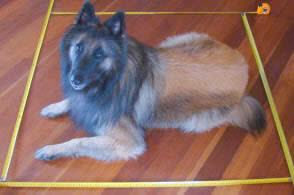
Area is length by length, so the basic unit of area is a square that's 1 meter on each side, in other words one square meter. The Unit is meters × meters, which is written m2 Volume Cubic Meter
Volume is length by length by length, so the basic unit of volume is a cube that's 1 meter on each side, in other words one cubic meter. The Unit is meters × meters × meters, which is written m3 Liter
A cube that's 1 meter on each side is also equal to 1,000 liters. 1 m3 = 1,000 liters Liter is abbreviated L (some people use lowercase l, but that looks too much like 1). So a liter is actually one-thousandth of a cubic meter. 1 liter = 11000 m3 Another way of thinking about a liter is: A box that's 0.1 meters (10 cm) on each side, One square meter that's millimeter thick Time Hour
An hour is 60 minutes, and a minute is 60 seconds, so an hour is: 60 × 60 = 3,600 seconds Day
A day is 24 hours so: 1 day = 24 × 60 × 60 = 86,400 second Speed Speed in meters per second (m/s)
This is a combination of two units (meters and seconds) to make a new one (m/s). If something is moving at 1 m/s it moves 1 meter every second. Speed in kilometers per hour (km/h)
A kilometer has 1000 meters, and an hour has 3600 seconds, so a kilometer per hour is: 1000 / 3600 = 1/3.6 = 0.277... m/s How did I know to make it 1000/3600, and not 3600/1000 (the other way around)? Read how to Safely Convert From One Unit to Another. Acceleration
Acceleration is how fast velocity changes. When a runner accelerates from 5 m/s (5 meter per second) to 6 m/s (6 meters per second) in just one second, they accelerate by 1 meter per second per second! And yes, "per second" is used twice!
Force is usually measured in the Unit of Newtons, an important measurement in Physics and Engineering. A Newton is how much force it takes to make 1 kg accelerate at 1 m/s2. 1 Newton = 1 kg m/s2 (one kilogram meter per second squared). So force is actually based on the meter, kilogram and second. And so force is a combination of the three basic units. SIThe Metric System had its beginnings back in 1670 by a mathematician called Gabriel Mouton. The modern version, (since 1960) is correctly called "International System of Units" or "SI" (from the French "Système International"). So we should really call it "SI", but mostly people just call it "Metric". A few special units are also needed to complete the SI System: ampere for electric current, kelvin for temperature, mole for the amount of substance, and candela for luminous intensity So the complete list is:
Quantity
Name
Symbol
All other units (such as speed, force, power and many more) are "derived units" that are defined using these seven base units. 2204, 2205, 980, 981, 982, 983, 984, 985, 2206, 3609 Copyright © 2026 Rod Pierce (责任编辑:) |