|
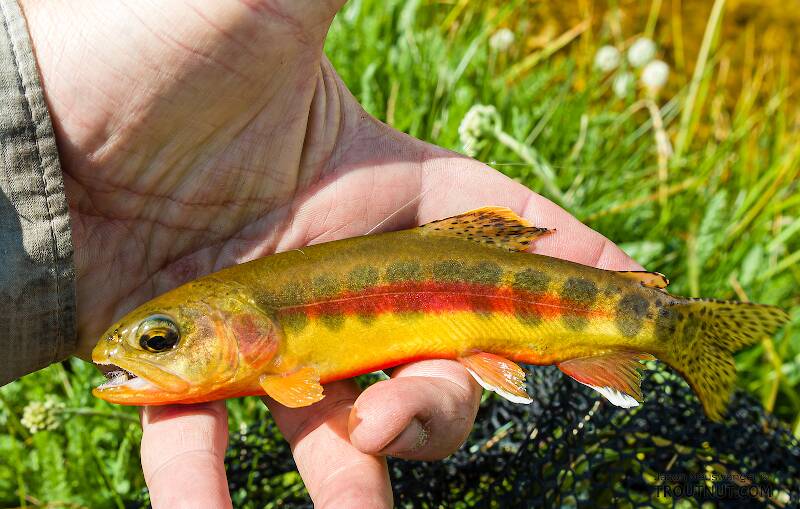
In 1892, the now-controversial ichthyologist David Starr Jordan published the formal description of a new subspecies of rainbow trout in the Proceedings of the National Museum. He quoted a Mr. H. W. Henshaw, who first mentioned the new trout in an engineering report following collections in 1875: These trout are found in very great abundance, each pool and rapid numbering its finny denizens by the score. They may be taken in any sort of weather, at any hour of the day, by almost any kind of bait. The only precaution required to catch them was stealth. Henshaw wrote: With the proper care in concealing one's self, a pool may be almost decimated ere the alarm will be taken, and I have seen fifteen fair-sized trout taken from a single pool in quick succession. This first description of the habits of what are now known as the California golden trout, or Volcano Creek golden trout, was echoed when I asked about them in the High Sierra Golden Trout Facebook group. The advice boiled down to, "They'll hit anything -- just don't let them see you!" Past experience with goldens introduced to high lakes across the West left me wary of this advice. I've heard "they'll hit anything" before, only to show up and find a pod of big goldens sipping size 24 midge pupae with taste so discriminating I imagined them inspecting each pupa with a monocle before biting. Striking a compromise between the prevailing advice and my wariness of picky fish, I brought only six fly boxes on my trip to catch these special fish in their native range.
I met a friend in Seattle and we flew together to Reno. After an overnight gear test and altitude acclimation day in pursuit of reintroduced native stream-resident Lahontan cutthroat, and a sightseeing hike through the oldest trees in the world at Methuselah Grove, I turned our rental car up Horseshoe Meadows Road toward the Cottonwood Lakes Trailhead. In the space of just 2.5 straight-line miles, the road switchbacks its way up 4,000 vertical feet of mountainside. The Alabama Hills, which tower over the town of Lone Pine and provide the mountainous canyon backdrop of many Hollywood westerns, drop away in the distance until they look like pimples on the valley floor. Most of the road has no guardrails, and drivers have to weave around fallen rocks that get removed once or twice a day by Inyo National Forest staff. The road is wide and well maintained. However, in places like this, my mind wanders to the possibility that my car might spontaneously jump up into the air and hover-scoot 30 feet to the left or right before plunging us thousands of feet to a fiery death. I have not known cars to do this, but some part of my brain does not trust them. I didn't make it far up the mountain before parking and turning the wheel over to my friend, whose rock climbing hobby belies a calmer attitude toward heights than mine. The next morning we would begin a 6-day loop through the Golden Trout Wilderness. The crown jewel of the trip would be a visit to Volcanic Creek Left Stringer, a very remote and tiny creek believed to hold Golden Trout that never mixed with rainbows during the frontier period, when ranchers seeking larger table fare contaminated the rest of the population with Kern River Rainbow Trout genes. The fish that remain in Golden Trout Creek and the South Fork Kern are around 99 % pure golden trout and visually indistinguishable from the Left Stringer fish, but on a trip motivated by the pursuit of purity, 100 % is meaningful goal. Regarding naming places...
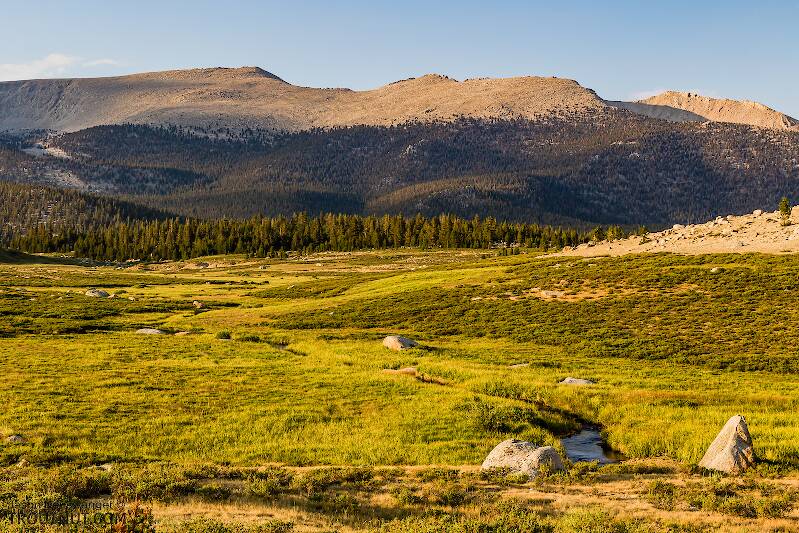
Golden trout spots are typically among the most closely-guarded secrets in fly fishing. However, their native range is not. The name of Golden Trout Creek is a bit of a give-away, being located as it is in the Golden Trout Wilderness, in a land where the Golden Trout is the state fish. The trailhead is hours from anywhere, and the fish are hours from there, on the other side of a big mountain. Within their range, almost every creek teems with them. They're very small—an 8-incher is a trophy—and nowhere are they bigger or better than anywhere else. The few human visitors are scattered across many miles of terrain. Because there are easier places to catch larger golden trout, the only reason to make this trip is a pilgrimage to honor these special little fish in the place they most belong. I trust that almost anyone willing to dedicate so much work to such a modest goal will be respectful of the resource, and I don't expect this article to motivate enough people to detract from the solitude. Most who are inclined to do a trip like this have had it on their mind for years already, and they need no push from me. If this article helps a few such people plan a more enjoyable trip, great. But its main purpose is to share the experience with those who might never be lucky enough to see it for themselves. Wilderness needs to be loved, but not loved to death. In my estimation, this kind of story is good (or at least not bad) for this particular place. (责任编辑:) |