|
Explore This Section Earth Indicators Mitigation and Adaptation Stories More
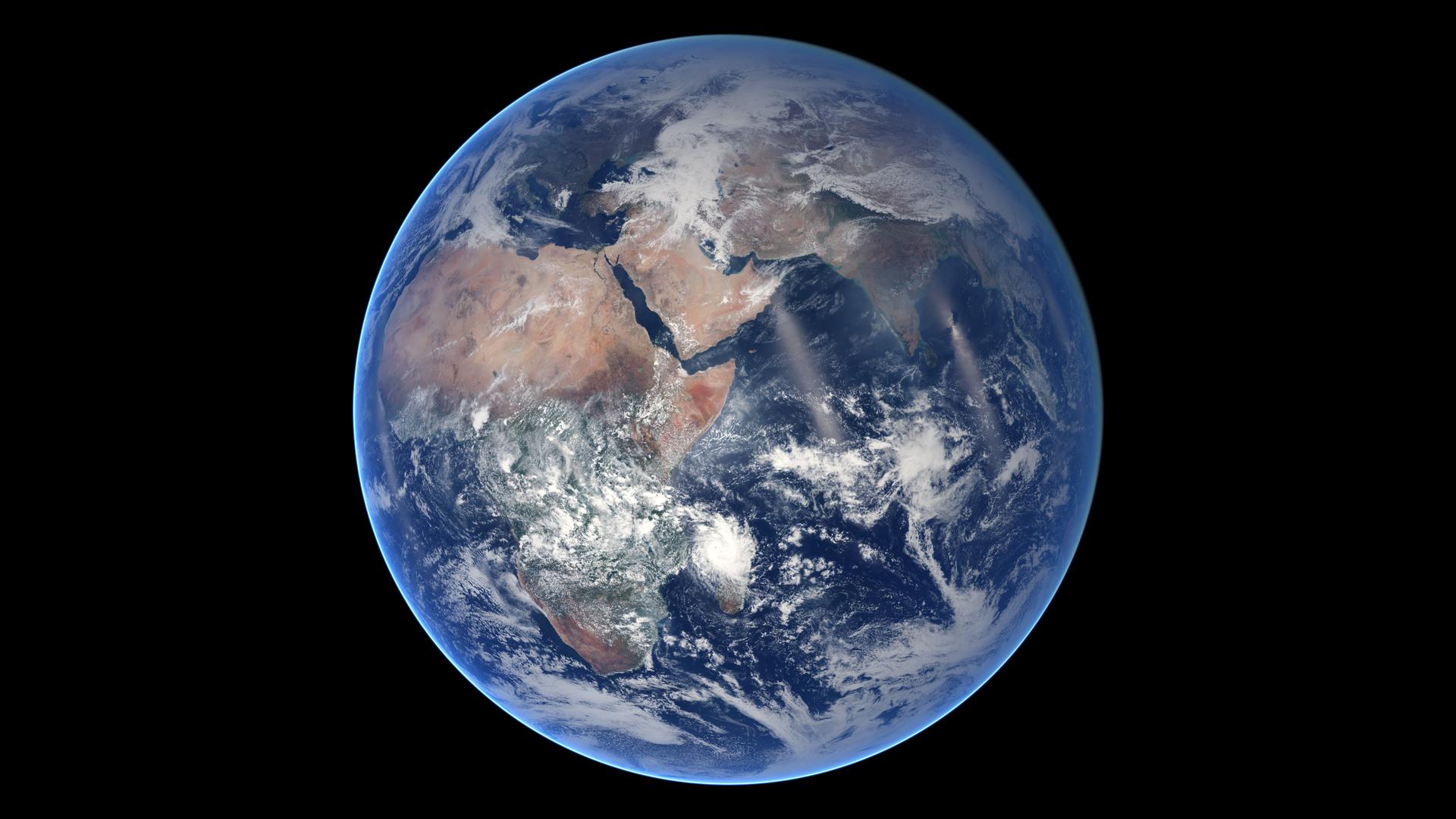
Climate Change From the unique vantage point in space, NASA collects critical long-term observations of our changing planet.
NASA applies ingenuity and expertise gained from decades of planetary and deep-space exploration to the study of our home planet. The Earth Science Division operates more than 20 satellites in orbit, sponsors hundreds of research programs and studies, and funds opportunities to put data to use for societal needs. We develop new ways to observe the oceans, land cover, ice, atmosphere, and life, and we measure how changes in one drive changes in others over the short and long term. While listening to and collaborating with industry leaders, international partners, academic institutions, and other users of our data, we deepen knowledge of our planet, drive innovations, and deliver science to help inform decisions that benefit the nation and the world. Learn more about how NASA Earth science helps Americans respond to challenges.
Wildfires and Climate Change Earth's warming climate is amplifying wildland fire activity, particularly in northern and temperate forests. When fires ignite the landscape, NASA’s satellites and instruments can detect and track them. This information helps communities and land managers around the world prepare for and respond to fires, and also provides a rich data source to help scientists better understand this growing risk. Learn More about Wildfires and Climate Change
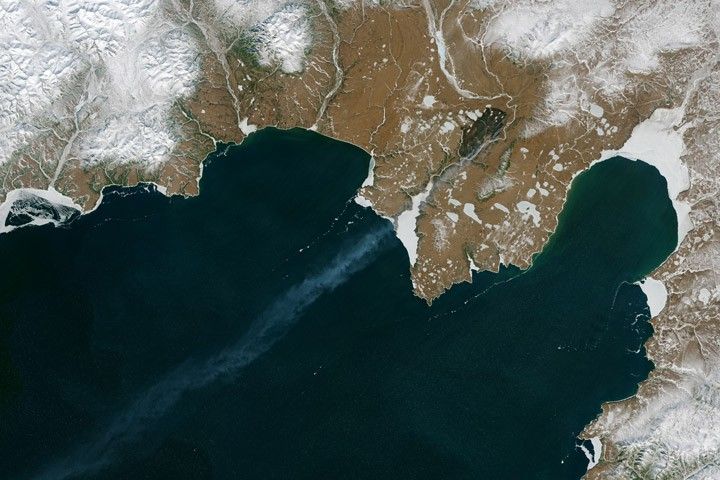
Latest News More NASA News Article 7 Min Read Fire on Ice: The Arctic’s Changing Fire Regime
Article 4 Min Read Satellites Detect Seasonal Pulses in Earth’s Glaciers
1 Min Read NASA, NOAA 2025 Ozone Hole Update Article
5 Min Read NASA, NOAA Rank 2025 Ozone Hole as 5th Smallest Since 1992 Article
4 Min Read Arctic Sea Ice Reaches Annual Low Article
Evidence Causes Effects
How Do We Know Climate Change is Real? There is unequivocal evidence that Earth is warming at an unprecedented rate. Human activity is the principal cause. Earth-orbiting satellites and new technologies have helped scientists see the big picture, collecting many different types of information about our planet and its climate all over the world. These data, collected over many years, reveal the signs and patterns of a changing climate. Read More
What is causing climate change? Human activities are driving the global warming trend observed since the mid-20th century. Scientists attribute the global warming trend observed since the mid-20th century to the human expansion of the "greenhouse effect" — warming that results when the atmosphere traps heat radiating from Earth toward space. Read More
What are the effects of climate change? The effects of human-caused global warming are happening now, are irreversible for people alive today, and will worsen as long as humans add greenhouse gases to the atmosphere. We already see effects scientists predicted, such as the loss of sea ice, melting glaciers and ice sheets, sea level rise, and more intense heat waves. Read More
Images of Change Before-and-after images of Earth. Learn More about Images of Change
Climate Change Resources
Climate Time Machine
Climate change in recent history
Global Ice Viewer
Climate change’s impact on ice
Multimedia
Vast library of images, videos, graphics, and more
En español
Creciente biblioteca de recursos en español
Climate Data Resources
Sea Level Change Observations from Space
Established in 2014, this NASA-sponsored team works to improve the understanding of regional relative sea-level change on a range of timescales. They work with partners to translate the latest science and research into actionable information and to communicate how impacts are increasing at the coast.
NASA Center for Climate Simulation (NCCS)
NCCS provides high performance computing for NASA-sponsored scientists and engineers. The purpose is to enhance NASA capabilities in Earth science, with an emphasis on weather and climate prediction, and to enable future scientific discoveries that will benefit humankind.
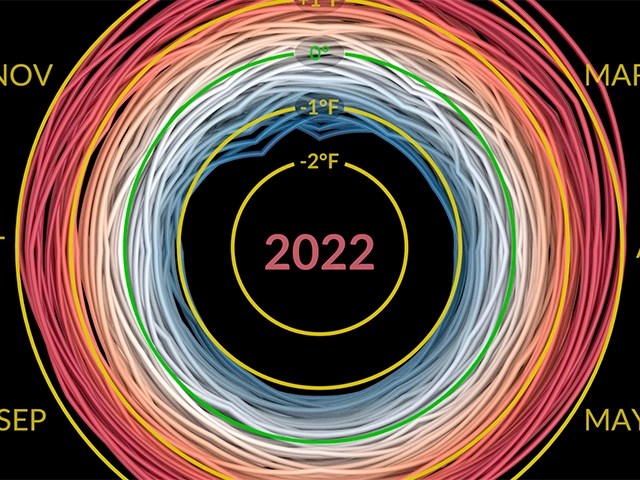
GISS Surface Temperature Analysis (GISTEMP)
NASA’s Goddard Institute of Space Studies assembles one of the world's most trusted global temperature records, using a combination of surface air temperature data acquired by tens of thousands of meteorological stations, as well as sea surface temperature data from ship- and buoy-based instruments.
NASA Earth Exchange (NEX)
NEX combines state-of-the-art supercomputing, Earth system modeling, and NASA remote sensing data feeds to deliver a work environment for exploring and analyzing terabyte- to petabyte-scale datasets covering large regions, continents or the globe.
Global Modeling and Assimilation Office (GMAO)
GMAO members perform research, develop models and assimilation systems, and produce quasi-operational products in support of NASA's missions. The Goddard Earth Observing System" (GEOS) family of models is used for applications across a wide range of spatial scales, from kilometers to many tens of kilometers.
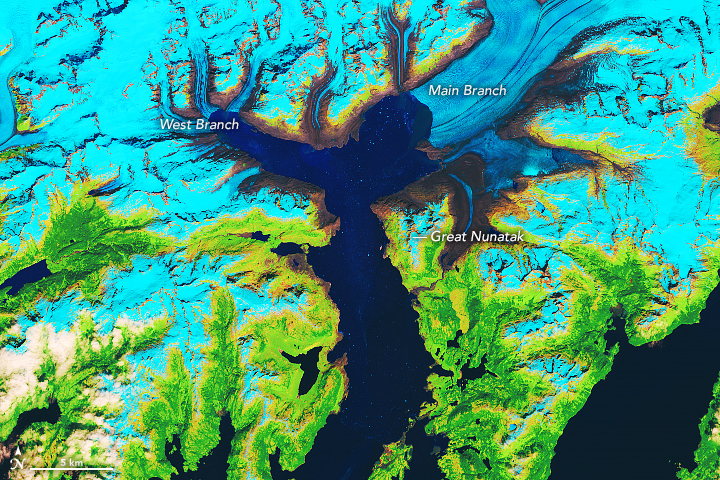
World of Change NASA Earth Observatory has produced a collection of image series that show some features of Earth that have changed over time due to both natural and human-induced causes. Learn More
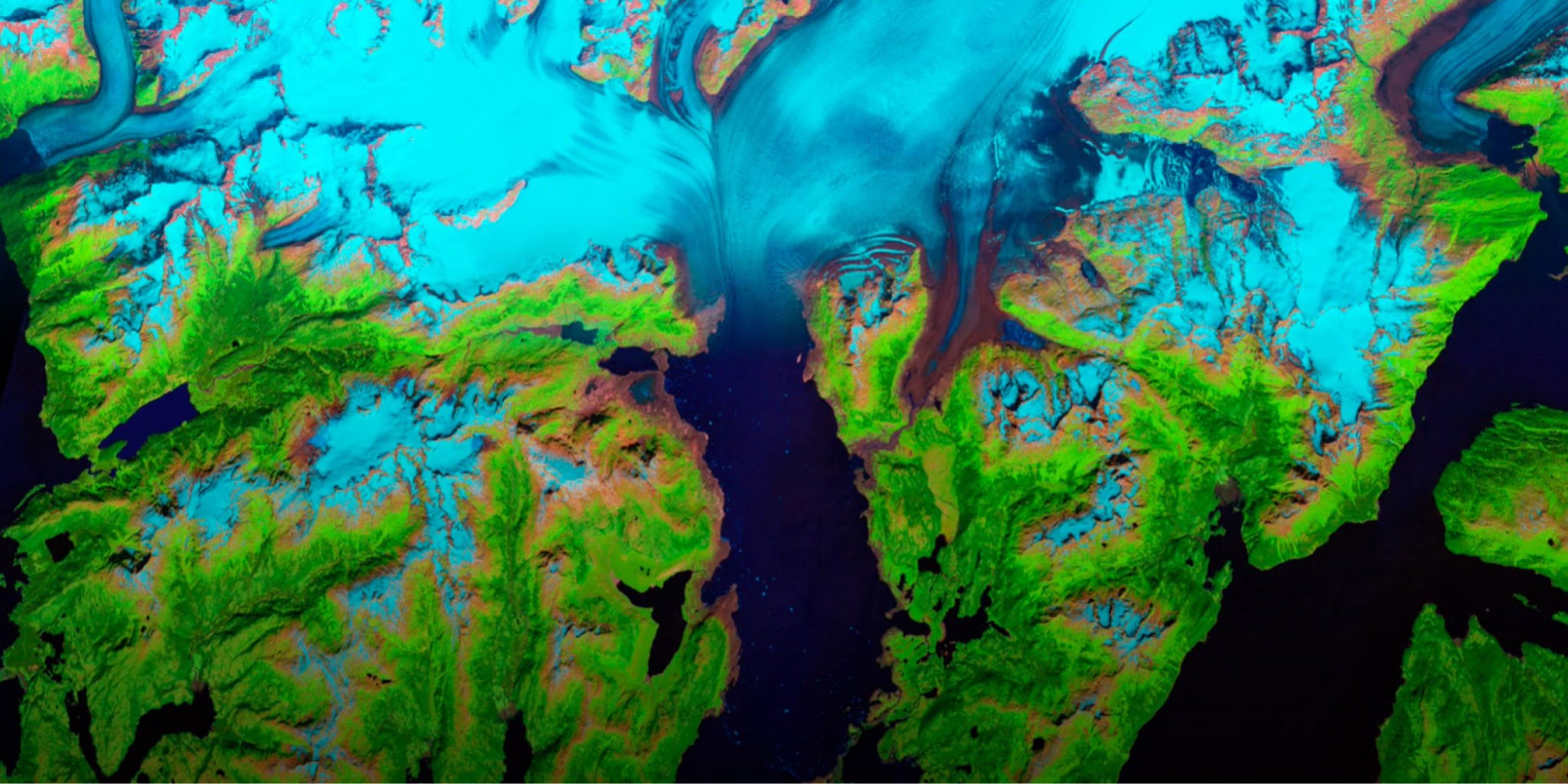
This false-color image, captured by the Landsat 8 satellite, shows Alaska's Columbia Glacier and the surrounding landscape following the more than 20 kilometer retreat of the glacier between 1986 and 2019. Credit: NASA Earth Observatory (责任编辑:) |